Permanent Deputy Prime Minister Pham Gia Tuc has just signed Decision No. 929/QD-TTg dated May 25, 2026, approving the Program for the Development of Supporting Industries in the 2026 - 2035 period (the Program).
The 2026-2035 Supporting Industry Development Program aims to enhance domestic production capacity, increase localization rates, and promote the deeper participation of Vietnamese enterprises in the global supply chain.
According to the decision, supporting industries are identified as the foundation for developing the national industry in a sustainable, autonomous, and modern direction. The program aims to establish domestic production capacity for raw materials, components, spare parts, and input equipment, thereby reducing reliance on imports, enhancing economic resilience, and contributing to the goal of "double-digit" economic growth in the upcoming period.
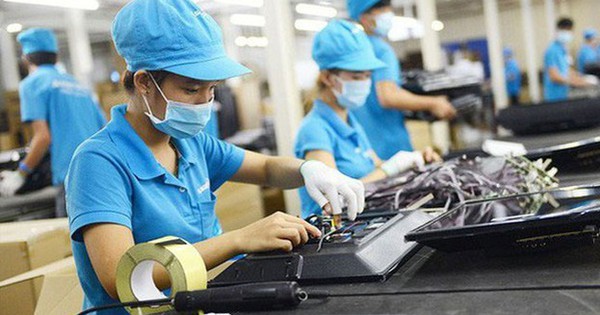
By 2035, Vietnam's supporting industries are oriented to develop with the majority of specialized sectors reaching advanced technological levels.
The Program emphasizes the requirement to develop supporting industries in tandem with technological innovation, digital transformation, and sustainable development. Supporting industry enterprises are determined to play a central role in production, innovation, and market expansion, while the State plays a constructive role through institutional improvement, resource support, science and technology, and market development.
One of the key orientations is to develop supporting industries along the global supply chain and value chain, using technical requirements, quality standards, and the localization rates of leading enterprises as a guide for enterprise support activities.
Accordingly, the Program prioritizes developing supporting industries serving smart electronics, energy equipment, railways, automobiles, mechanical engineering and automation, high-tech industries, textiles, and footwear associated with the green economy.
The goal by 2030 is for several key industries to achieve an average localization rate of 40-45%, with the industrial competitiveness index ranking among the top three ASEAN countries.
Specifically, it strives for a localization rate of 25-30% in the electronics industry; 40% in mechanical manufacturing; 22-30% in automobiles; 60% in textiles; 60-65% in footwear; and 15% in high-tech industries.
By 2035, Vietnam's supporting industries are oriented to develop with the majority of specialized sectors achieving advanced technological levels, product quality meeting international standards, and participating deeply in the global value chain.
The localization rate by 2035 is projected to increase to 35-40% for the electronics industry; 50% for mechanical manufacturing; 32-40% for automobiles; 70% for textiles; 70-75% for footwear; and 20% for high-tech industries.
Besides the localization rate targets, the Program also focuses on supporting enterprises in enhancing their management, research, and technology development capacities.
In the period up to 2030, it is expected that about 600 supporting industry enterprises will receive consulting and training support on corporate governance and production management according to international standards; of which, about 400 enterprises will successfully apply these management systems post-support.
Simultaneously, about 80 enterprises will be supported in research and development, technological innovation, trial production, and technology transfer reception; with 40 enterprises expected to successfully apply new technologies.
By 2035, the number of enterprises receiving management consulting and training support will increase to about 900; while about 120 enterprises will be supported in research, development, and adopting new technologies.
To implement the above goals, the Program sets out four key groups of tasks and solutions, including: improving institutions and laws; promoting science and technology, human resource development, and training; building and operating a database system; and developing the market and strengthening communication for the supporting industry.
Source: https://moit.gov.vn/tin-tuc/phat-trien-cong-nghiep/phe-duyet-chuong-trinh-phat-trien-cong-nghiep-ho-tro-giai-doan-2026-2035.html