On November 24, 2021, Deputy Prime Minister Le Van Thanh signed Decision No. 1978/QD-TTg approving the National Strategy for Rural Water Supply and Sanitation by 2030, with a vision to 2045.
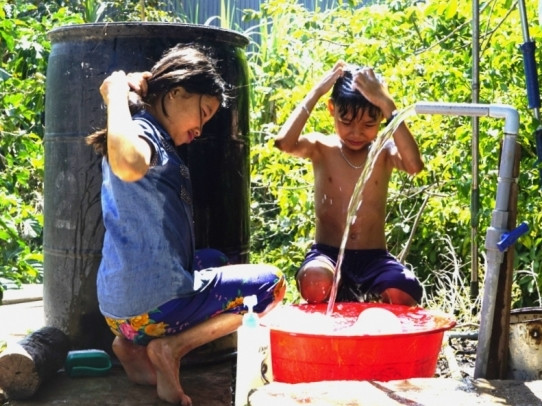
Illustration photo
The objective is to ensure that rural residents have the right to equal, convenient, and safe access to clean water services at a reasonable cost; to ensure household and public sanitation, environmental sanitation, and disease prevention and control. It also aims to protect health, reduce water- and sanitation-related diseases, improve the quality of life, ensure social security for rural people, narrow the rural-urban gap, and contribute to building new rural areas.
Specifically, by 2030, 65% of the rural population will have access to clean water meeting quality standards with a minimum quantity of 60 liters/person/day; 100% of rural households, schools, and health stations will have hygienic latrines meeting standards and regulations; 100% of rural people will practice personal hygiene regularly. It strives for 25% of concentrated rural residential areas to have domestic wastewater collection systems, and 15% of domestic wastewater to be treated; 75% of livestock households and farms will have their livestock waste treated.
By 2045: Strive for 100% of the rural population to have access to safe and sustainable clean water and sanitation; 50% of concentrated rural residential areas will have domestic wastewater collection systems, and 30% of domestic wastewater will be treated; 100% of livestock households and farms will have their livestock waste treated.
To achieve the above objectives, the Strategy sets out specific solutions. Regarding rural clean water supply, specifically centralized clean water supply: Invest in building centralized clean water supply facilities coupled with exploitation, management, and operation according to approved planning, ensuring water security and climate change adaptation. Repair and upgrade clean water supply facilities to ensure effective operation, linked with the supervision of facility management and operation; Invest in building large-scale, synchronized, inter-commune, and inter-district centralized clean water supply facilities, connecting with urban water supply systems where appropriate to ensure effective and sustainable operation; prioritize using water sources from irrigation systems, reservoirs, and weirs for domestic water supply. The State prioritizes investment in facilities creating domestic water sources in areas with water scarcity and difficulties, areas frequently affected by droughts, saltwater intrusion, and water pollution; supports investment in building centralized clean water supply facilities for remote, mountainous, ethnic minority, coastal, border, and island areas.
Regarding safe water supply and climate change adaptation: Develop guidelines and implement safe water supply plans to respond to natural disasters and adapt to climate change; strengthen monitoring and evaluation of the implementation of safe water supply plans; Share water sources and related information among sectors and localities to serve water supply, management, and protection of water sources; Improve water quality testing capacity for water supply units, invest in building laboratories and modern testing equipment for internal and external water quality control; improve capacity to identify and handle incidents causing water supply interruptions. Establish a system for monitoring and warning of domestic water quality and reserves, controlling domestic water source pollution from civil, agricultural, and industrial activities, and have alternative water source plans in case of water pollution incidents; Develop a plan to proactively respond to climate change and overcome the consequences of domestic water shortages caused by natural disasters, droughts, saltwater intrusion, floods, and inundation; ensure the maintenance of minimum domestic water supply in case of natural disasters and epidemics.
Regarding implementation organization, the Ministry of Agriculture and Rural Development shall preside over and coordinate with relevant ministries, branches, and localities to implement the contents of the Strategy; direct and deploy programs, schemes, and projects to implement the objectives, tasks, and solutions of the Strategy according to its state management functions and assigned authority. It will also track, urge, inspect, supervise, and periodically review and evaluate the results of the Strategy's implementation; submit to the Prime Minister issues arising beyond its authority and consider deciding on adjustments to the Strategy if necessary. The Ministry will preside over and coordinate with the Bank for Social Policies and relevant agencies to research, review, update, and amend credit policies for rural clean water and environmental sanitation to continue investing in building, upgrading, and repairing these facilities. Furthermore, it will organize statistics, synthesis, and the building of a database to serve state management activities on rural clean water and sanitation; organize propaganda, dissemination, and legal education, promote information and communication activities to raise community awareness; and guide, inspect, supervise, and synthesize the implementation status of rural safe water supply plans.
Other relevant ministries, branches, and socio-political organizations shall proactively develop and implement tasks and solutions to achieve the Strategy's objectives according to their assigned functions and tasks.
T. Phuong (compiled)
Source: Phê duyệt Chiến lược quốc gia cấp nước sạch và vệ sinh nông thôn đến năm 2030, tầm nhìn đến năm 2045